Sunday, 16 July 2017

Free resource material - Natural play, playspaces and gardening with children


I was reviewing some of the natural play resources that I have on my blog page and have mean't to do a post sharing the links for a while. All materials are free to download and where it is a copy of someone else's creation I have given appropriate attribution. With the Powerpoint presentations I only ask you do likewise if utilizing them in a group teaching or training sessions. I will post one a  day when I have the time.

Ebooks

A Comprehensive Guide to Growing Vegetables.
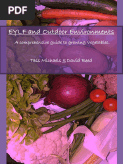

This guide provides specific information for educators and parents who want to introduce the concepts of the growth and care of edible vegetables to children. The book specifically addresses vegetation growth, taste, smell and texture, universal access, children's tools and participation, climatic planting zones, positioning plants within your playspace/garden, a global perspective on different types of gardens, specific information about the construction of the garden, propagation methods, preparation for planting, appropriate vegetables to plant, organic methods to feed and protect your vegetables, harvesting, preserving and information about plant and seed suppliers worldwide.


Resources to be used in conjunction with - A comprehensive guide to growing vegetables.


Plant Labels - Coloured
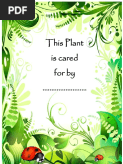
The labels can be printed A4 page or 4 per page (see your printer setup) and are used in conjunction with Plant adoption certificates to encouraged children in naturalistic childcare environments to bond and care for plants. Obviously labels may need to be laminated or otherwise waterproofed when placed outside. Uncoloured labels can be coloured and cut by the children before laminating/ waterproofing


Plant Certificates
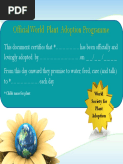

Plant adoption Certificate I - used to encouraged children in naturalistic childcare environments to bond and care for plants.
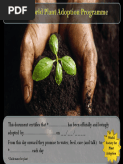
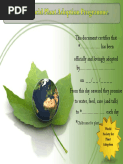


Plant adoption Certificate II  - used to encouraged children in naturalistic childcare environments to bond and care for plants.

Plant adoption Certificate III - used to encouraged children in naturalistic childcare environments to bond and care for plants.


Plant adoption Certificate IV - used to encouraged children in naturalistic childcare environments to bond and care for plants.


Additional material


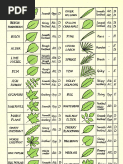
Leaf identification chart
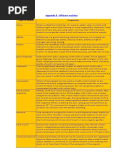


Different Mulches
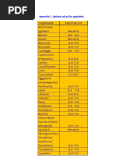


Optimal Soil Ph for Vegetables
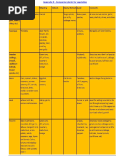


Companion Plantings


Saturday, 1 July 2017

Salzburg Global Seminar - Topics

Salzburg Global Seminar - Topics

The full article can be read through the hyperlink above

During a five-day program held in March, 52 experts in urban planning, childhood development, conservation, environmental policy, and health considered how green spaces could better meet the needs, and be accessible for, children.
The Salzburg Statement on The Child in the City: Health, Parks and Play recommends several policies, practices and investments. It also contains eight actions which can transform cities for children.

These eight actions are:

  1. Ensure children of all ages, backgrounds, income, and abilities have equitable access to nature and play regularly and in meaningful ways to promote good health and wellbeing. 
  2. Embed nature in everyday places used by children, such as schools, backyards, parks, playgrounds and city streets, to make the city into a natural outdoor classroom. 
  3. Involve children in designing and planning natural spaces for recreation, education, inspiration and health, to give them ownership and pride in their local communities, schools and parks 
  4. Build curiosity, wonder, and care for nature in children (for example by greening school grounds and involving children with community gardens). 
  5. Protect natural features across cityscapes and create an equitably distributed network of accessible green and nature-rich spaces that all generations can reach on foot. 
  6. Connect cities with the broader ecosystems in which they are embedded, creating corridors for people, plants and animals to move safely across the city and into its surroundings. 
  7. Establish more urban conservation areas to increase access to nature and connect cities to the broader protected area network 
  8. Work together through cross sectoral and multi-level partnerships to build an inclusive culture of health in cities.

Monday, 19 June 2017

Israel’s first outdoor preschool incorporates switchblades and scorpions | Jewish Telegraphic Agency


Israel’s first outdoor preschool incorporates switchblades and scorpions | Jewish Telegraphic Agency

The full article can be read through the hyperlink above


"It sounds like a Jewish mother’s nightmare: a preschool class held outdoors in the desert. But parents in this remote Israeli town drop off their children at Gan Keshet every weekday during the school year, setting them free to cook on a campfire, whittle sticks with switchblades and search for scorpions. Class goes on rain (rare) or shine (intense).
“The kids meet real life when they come here,” said Ron Meltzer, the school’s soft-spoken principal and visionary. “Spending time in nature — without an iPhone or computer — gives them many important gifts. I think it’s a solution for a major problem in our culture today.”

UN links child-friendliness to environment | Child in the City

UN links child-friendliness to environment | Child in the City

The full article can be read through the hyperlink above


"In its report of the DGD the UNCRC says ‘the impact of environmental damage on children’s rights is not a new issue. Yet, despite data explicitly linking environmental harm to child rights violations, increased awareness of environmental crises and numerous international agreements, the understanding of the relationship between children’s rights and the environment is still in its infancy’.


The report finds that ‘the parallel development of environmental law and human rights law has contributed to a lack of coordination between institutions dealing with child rights and environmental issues within both governments and the United Nations. This coordination gap is one of the reasons for inadequate monitoring and accountability for child rights violations that relate to the environment’."

Saturday, 3 June 2017

Back to nature: Getting dirty boosts child development, say experts - The Mainichi

Back to nature: Getting dirty boosts child development, say experts - The Mainichi

The full article can be read through the hyperlink above


Playing in nature while coming into contact with dirt and insects has an impact on child development. "By using all five senses to experience the outdoors, children are able to feel that they are a part of nature," says Michio Kawasaki, specially appointed professor of developmental psychology at Takada Junior College. Different from standardized man-made things that are sold as products, nature and living things that are a part of it have a form and a shape -- they move, they have a smell and a certain feeling when you touch them with your hands and even have a taste as well. Surrounded by the diversity of nature, children keep developing daily. "Humans are a part of nature. I think through being connected to nature, we can be surprised or moved, comforted or soothed," Kawasaki explains.

Sunday, 28 May 2017

Official unveiling of the Sylvania Heights Public School new playspace.


What an absolute pleasure it was to join the children, staff and other dignitaries at Sylvania Heights Public School for the official unveiling of their new playspace. Thank you for the invitation and the warm welcome. I would love to revisit in a few months when the new plants have grown out and the local aboriginal artists have completed painting the totems. A few photos from my visit.


What happens when Toronto takes the ‘play’ out of playground - The Globe and Mail

What happens when Toronto takes the ‘play’ out of playground - The Globe and Mail

The full article can be read through the hyperlink above

"Ms. Yunusov wistfully recalled the old slide, with a curving set of climbing bars up to the platform. “It was fun because there was no easy way to get [up],” she said. Now, she added, glancing at her daughter wandering around the new park, “there’s nothing [fun]. We don’t really go here any more.”

Such are the unintended consequences when liability concerns trump play. As the city, the school board and other agencies install the newest generation of CSA Group-approved equipment, the result is often playgrounds with gear designed almost exclusively for very young children; the more traditional elements – including sandboxes and swings suitable for under doggies – have been scrapped in the name of risk management. “Everything is built with litigation at the forefront.”